Embark on a captivating journey through the world of Bridge Card Game, where strategy and skill intertwine to create an unforgettable gaming experience. Learn about its origins, gameplay, and the thrill of competitive tournaments that await.
Overview of Bridge Card Game
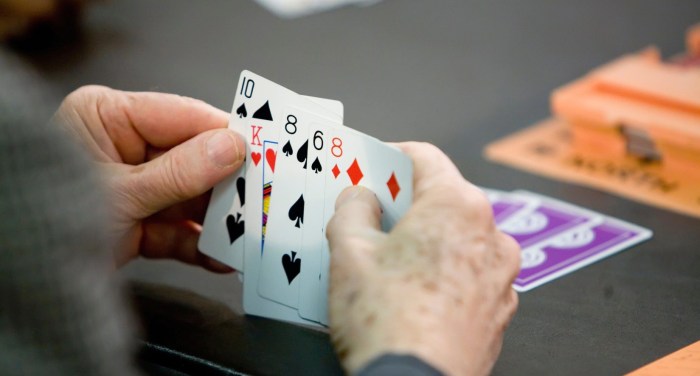
Bridge is a popular card game that has been around for centuries, with its origins traced back to the 19th century in England. It is a trick-taking game played with a standard deck of 52 cards by four players in two partnerships.
The objective of Bridge is to score points by winning tricks during the play of the hand and accurately bidding on the number of tricks your partnership can win. The game consists of two main phases: the bidding phase, where players communicate the strength of their hands and determine the contract, and the play phase, where the cards are played and tricks are won.
Variations of Bridge
There are several variations of Bridge, including Rubber Bridge, Duplicate Bridge, and Chicago Bridge. Rubber Bridge is more casual and often played socially, while Duplicate Bridge involves multiple tables and is popular in competitive settings. Chicago Bridge, also known as Four-Deal Bridge, is a shorter variation where each round consists of four deals.
Rules and Gameplay
In the game of Bridge, players work in partnerships to outscore their opponents through a series of hands where communication, strategy, and skill are key. The game is played with a standard deck of 52 cards and is divided into two main phases: the bidding phase and the playing phase.
Partnerships in Bridge
In Bridge, players are divided into two partnerships, with partners sitting opposite each other at the table. The partnerships are usually referred to as North-South and East-West. Partnerships work together to communicate information about their hands through bidding and to play as a team during the tricks.
Bidding Strategies
During the bidding phase, players take turns making bids to communicate information about their hands to their partner. Bidding involves stating the number of tricks the partnership believes they can win and the trump suit or declaring No Trump. The bidding continues until three players pass in a row.
- Opening bid: The player with the strongest hand makes the opening bid, indicating the strength and distribution of their hand.
- Response bids: The partner of the opening bidder responds with their own bid, conveying information about their hand.
- Competitive bidding: Bidding can become competitive as partnerships compete to win the contract and set the opponents.
Importance of Communication
Communication is essential in Bridge, as partners need to understand each other’s bids to make informed decisions during the playing phase. By interpreting bids and signals, partners can work together to achieve the best possible result in each hand.
Remember, successful partnerships in Bridge rely on effective communication, trust, and a shared understanding of each other’s bidding systems and strategies.
Scoring and Winning
In the game of Bridge, scoring is an essential part of determining the winner. Points are earned based on the number of tricks taken and the contract bid by the players. The ultimate goal is to accumulate enough points to win the game.
Scoring System
In Bridge, each contract bid and made earns a certain number of points. For example, bidding and making a small slam (12 tricks) earns 920 points, while bidding and making a grand slam (13 tricks) earns 1,440 points. Points are also awarded for overtricks and undertricks.
How to Earn Points
Players earn points by fulfilling their contract and taking the required number of tricks. They can also earn bonus points for fulfilling certain conditions, such as bidding and making a game or slam. Overtricks can also contribute to additional points.
Common Strategies for Winning
1. Communication
Players must communicate effectively with their partner to determine the best contract to bid and maximize their points.
2. Counting
Keeping track of the cards played can help players deduce the distribution of the remaining cards and make informed decisions.
3. Defense
A strong defense can prevent opponents from making their contract and earning points, giving your team a strategic advantage.
4. Risk Management
Balancing aggressive bidding with calculated risks can help players secure higher rewards without risking too many points.
Bridge Tournaments
Bridge tournaments are a thrilling showcase of skill, strategy, and competitive spirit in the world of card games. Players from all over gather to test their abilities and vie for the top prize.
Famous Bridge Events and Players
Some of the most prestigious Bridge events include the Bermuda Bowl, the World Bridge Championships, and the Cavendish Invitational. These tournaments attract top players from around the globe, each bringing their unique style and expertise to the table.
- The Bermuda Bowl is a biennial world championship event for national teams, with a rich history dating back to 1950.
- The World Bridge Championships feature a variety of events, including pairs and team competitions, and serve as a battleground for the best players in the world.
- The Cavendish Invitational is known for its high-stakes games and star-studded lineup, drawing both professional players and avid enthusiasts.
Competitive Skills in Bridge Tournaments
Success in Bridge tournaments requires a unique blend of strategic thinking, teamwork, and adaptability. Players must not only master the rules and conventions of the game but also anticipate their opponents’ moves and adjust their strategies accordingly.
- Communication and partnership are key in Bridge, as players must work together seamlessly to achieve their goals and outsmart their rivals.
- Analytical skills play a crucial role in evaluating the cards, predicting the distribution, and maximizing the potential of each hand.
- Emotional intelligence is also essential, as maintaining focus, composure, and resilience under pressure can make all the difference in a tight match.
Construction and Maintenance
Building bridges involves the use of various construction materials and techniques to ensure their strength and durability.
Construction Materials
Bridge construction materials typically include:
- Steel: commonly used for its high tensile strength and durability.
- Concrete: used for its compressive strength and ability to withstand heavy loads.
- Wood: often used for pedestrian bridges or historical structures.
- Cables: used in suspension bridges to support the bridge deck.
Maintenance Process
Regular maintenance is essential to ensure the safety and longevity of bridges. The process involves:
- Inspecting the bridge for signs of wear, corrosion, or structural damage.
- Repairing any identified issues promptly to prevent further deterioration.
- Cleaning and painting the bridge to protect it from environmental elements.
- Regularly monitoring the bridge’s condition to address any emerging problems.
Challenges in Maintenance
Maintaining bridges poses several challenges, including:
- Cost constraints that may limit the resources available for maintenance activities.
- Environmental factors such as weather conditions and natural disasters that can impact bridge integrity.
- Aging infrastructure that requires extensive repairs and upgrades to meet modern safety standards.
- Traffic disruptions during maintenance work, which can inconvenience commuters and residents.
Final Wrap-Up
As we conclude our exploration of Bridge Card Game, we are left with a deep appreciation for the intricacies of this strategic card game. From scoring to construction, the game offers a unique blend of challenge and camaraderie that continues to captivate players worldwide.
Key Questions Answered
How can I improve my bidding strategies in Bridge?
To enhance your bidding strategies, focus on understanding your partner’s signals and developing a system of communication to convey your hand strength effectively.
What are some common mistakes to avoid while playing Bridge?
Avoid making assumptions about your partner’s hand and strive to maintain open communication throughout the game to prevent misunderstandings.
Is it necessary to memorize all the scoring rules in Bridge?
While a basic understanding of scoring is essential, focusing on playing strategically and maximizing your points will naturally lead to a better grasp of the scoring system over time.